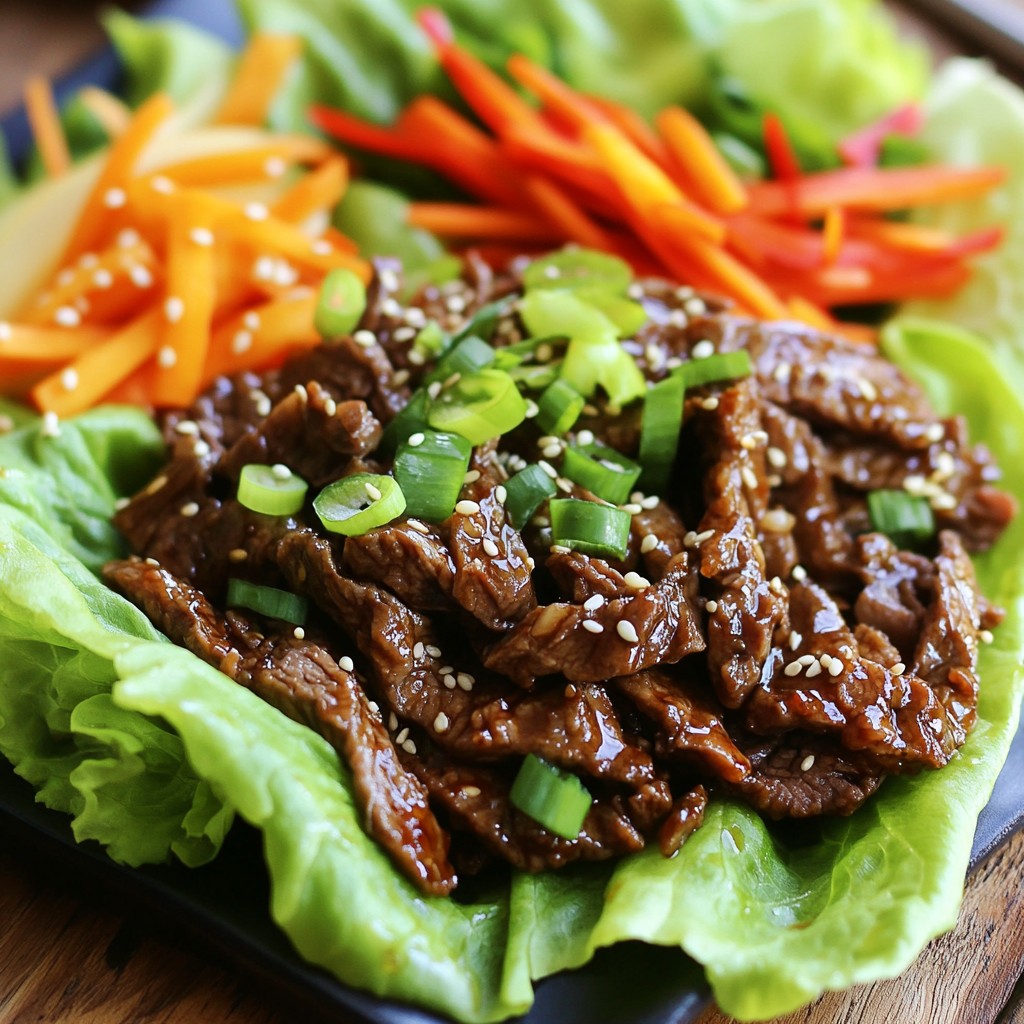
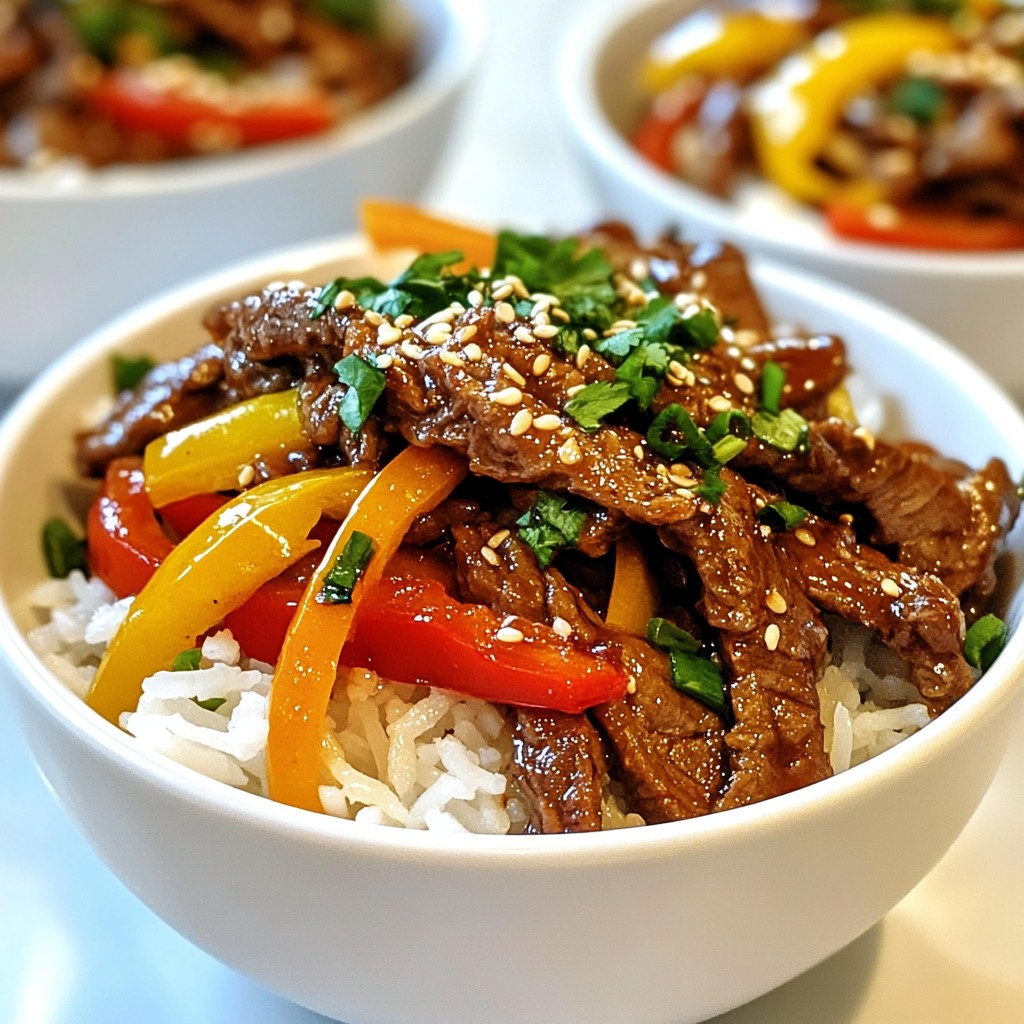
Korean Beef Bulgogi Bowls are packed with flavor and easy to make. This dish brings juicy, marinated beef and fresh veggies together in a delightful bowl. Whether you’re a busy parent or a college student, this meal will impress your taste buds without taking hours in the kitchen. Let’s dive into the simple steps to create your very own Korean Beef Bulgogi Bowl that’s sure to be a hit!
Why I Love This Recipe
- Bold Flavors: This dish is a perfect blend of sweet, savory, and spicy, thanks to the rich marinade and gochujang.
- Quick and Easy: Preparation is straightforward, making it ideal for busy weeknights or last-minute gatherings.
- Customizable: You can easily swap in your favorite vegetables or adjust the spice level to suit your taste.
- Beautiful Presentation: The vibrant colors of the veggies and garnishes make for an eye-catching meal that impresses.
Ingredients
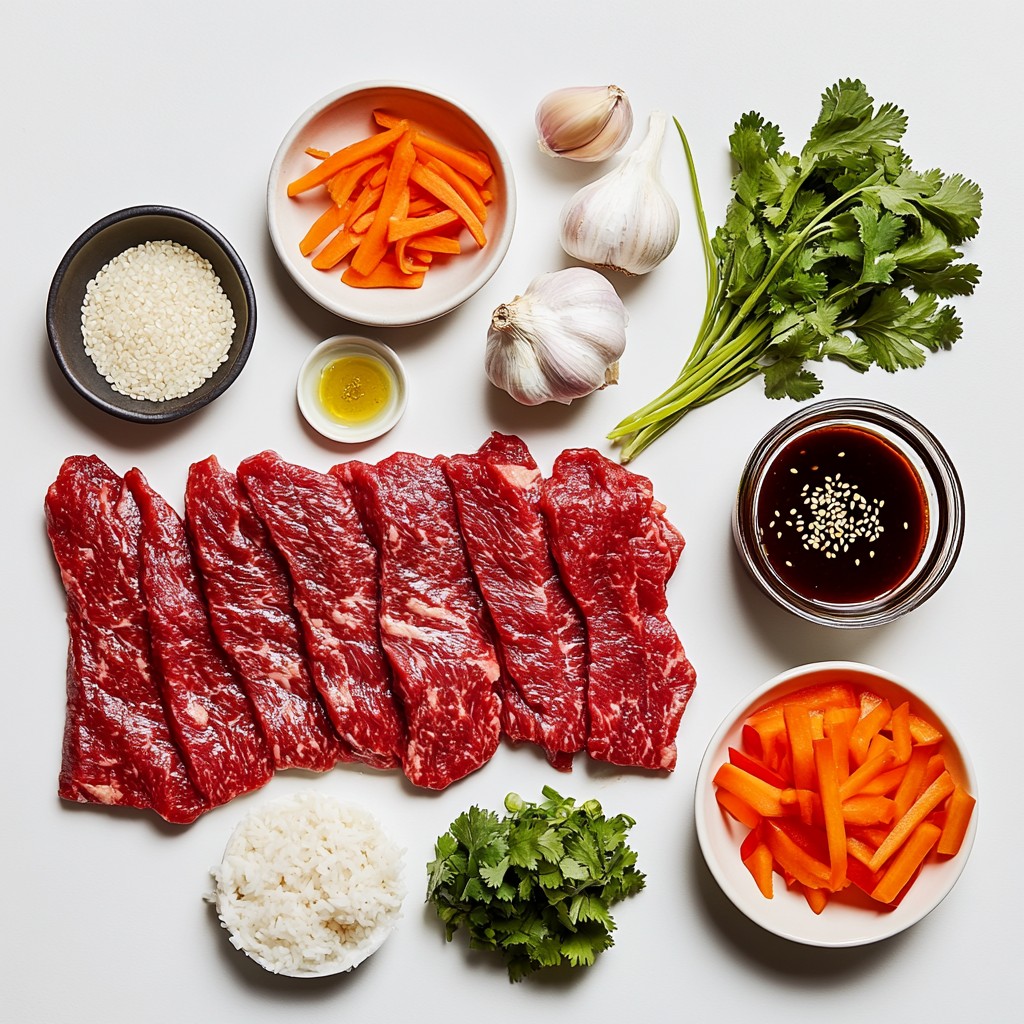
List of Ingredients
- 1 lb beef sirloin, thinly sliced against the grain
- 1/4 cup low-sodium soy sauce
- 2 tablespoons packed brown sugar
- 1 tablespoon toasted sesame oil
- 1 tablespoon fresh minced garlic
- 1 tablespoon fresh minced ginger
- 1 tablespoon gochujang (Korean chili paste)
- 1 medium carrot, julienned
- 1 bell pepper (any color), sliced into thin strips
- 3 green onions, white and green parts chopped separately
- 2 cups cooked jasmine rice
- Toasted sesame seeds for garnish
- Fresh cilantro leaves for garnish
Importance of Fresh Ingredients
Fresh ingredients make a big difference in flavor. When you use fresh beef, vegetables, and herbs, you get better taste and texture. Fresh garlic and ginger bring warmth and depth to the dish. They help create the rich flavor that makes bulgogi special. Always choose bright, firm veggies. They add color and crunch to your bowl. Fresh herbs like cilantro brighten the dish and add a pop of flavor.
Optional Ingredients for Customization
You can easily change up this dish to match your taste. Here are some ideas:
- Add sliced mushrooms for extra umami.
- Use zucchini or snap peas for a different crunch.
- Swap beef for chicken, tofu, or pork if you want.
- Try adding sesame seeds or crushed peanuts for a nutty touch.
- Adjust the spice with more or less gochujang based on your heat level.
Feel free to mix and match these ingredients to make your perfect bowl!
Step-by-Step Instructions
Preparing the Marinade
Start by mixing the marinade. In a medium bowl, whisk together:
- 1/4 cup low-sodium soy sauce
- 2 tablespoons packed brown sugar
- 1 tablespoon toasted sesame oil
- 1 tablespoon fresh minced garlic
- 1 tablespoon fresh minced ginger
- 1 tablespoon gochujang
Make sure it is smooth and well combined. This marinade brings a lot of flavor to the beef.
Marinating the Beef
Next, add the thinly sliced beef sirloin to the bowl. Toss the beef well to coat each piece in the marinade. Cover the bowl with plastic wrap. Let it sit in the fridge for at least 30 minutes. For the best flavor, aim for 2 hours.
Cooking the Beef and Vegetables
Heat a large skillet or wok on medium-high heat. Add a tablespoon of oil. Once the oil is hot, add the marinated beef. Stir-fry the beef for about 5-7 minutes. You want it browned and cooked through. After that, add the julienned carrot and sliced bell pepper. Stir-fry for another 3-4 minutes. The veggies should be tender but still crisp. When done, fold in the chopped green onion whites.
Assembling the Bowl
To serve, scoop a generous amount of jasmine rice into each bowl. Top with the beef and vegetable mix. Finally, garnish with toasted sesame seeds and fresh cilantro leaves. This adds a nice touch to your meal. Enjoy your Korean Beef Bulgogi Bowl!
Tips & Tricks
Marination Tips for Enhanced Flavor
To make your beef bulgogi taste amazing, marination is key. Use a mix of soy sauce, brown sugar, sesame oil, garlic, ginger, and gochujang. This blend adds depth to the meat. Marinate the beef for at least 30 minutes. For the best taste, let it sit for up to 2 hours. This extra time helps the meat soak up all the flavors. Remember, the thinner you slice the beef, the better it absorbs the marinade.
Recommended Cooking Techniques
For cooking, I suggest using a large skillet or wok. Heat it on medium-high heat and add some oil. Wait until the oil shimmers before adding the marinated beef. Stir-fry the beef for about 5-7 minutes. This cooking method keeps the meat tender and juicy. Add your veggies like carrots and bell peppers next. Stir-fry them for just a few minutes to keep them crisp. The goal is to get a nice color on the beef and keep the veggies fresh.
Serving Suggestions for Presentation
Presentation makes meals more fun. Serve the bulgogi over fluffy jasmine rice in colorful bowls. This adds a pop of color to your table. Top each bowl with the beef and veggies. Sprinkle some toasted sesame seeds on top. Add fresh cilantro for a nice touch. For an extra zing, serve with a slice of lime on the side. Using chopsticks can make it a fun experience too!
Pro Tips
- Marinate for Maximum Flavor: The longer you marinate the beef, the more flavorful it will be. Aim for at least 2 hours, or overnight if possible, to allow the flavors to fully penetrate the meat.
- Use High Heat for Stir-Frying: Cooking at high heat ensures that the beef cooks quickly and retains its tenderness. Make sure your skillet or wok is hot before adding the beef.
- Customize Your Veggies: Feel free to add or substitute your favorite vegetables, such as broccoli, snap peas, or mushrooms, to make this dish your own.
- Perfect Rice Texture: Rinse your jasmine rice before cooking to remove excess starch. This will help achieve fluffy, non-sticky rice that complements the bulgogi perfectly.
Variations
Alternative Proteins: Chicken, Tofu, or Pork
You can swap the beef for different proteins. Chicken works great with this recipe. Use boneless chicken thighs or breasts, sliced thin. Tofu is a fantastic option for a vegetarian meal. Firm tofu, cut into cubes, absorbs the flavors well. Pork is another tasty choice. Use pork tenderloin and slice it thinly like the beef. Each protein brings its own flavor and texture.
Vegetable Substitutions
This dish is flexible with vegetables. Carrots and bell peppers are common, but you can switch them out. Try broccoli, snap peas, or zucchini for a fresh twist. Adding mushrooms gives an earthy flavor. You can also toss in some baby spinach for extra greens. The key is to keep the veggies vibrant and slightly crunchy.
Spice Level Adjustments
If you like heat, add more gochujang or some red pepper flakes. For a milder taste, reduce the gochujang. You can also serve chili paste on the side. This way, each person can adjust the spice to their liking. Balancing heat is easy; just taste as you go. Enjoy experimenting with the flavors!
Storage Info
Storing Leftovers
To keep your Korean Beef Bulgogi Bowls fresh, store leftovers in an airtight container. Make sure to separate the beef and vegetables from the rice. This keeps everything from getting mushy. You can store them in the fridge for up to three days. If you want to enjoy them later, freezing is a great option.
Reheating Techniques
When you’re ready to eat, reheat the beef and veggies in a skillet. Use medium heat and stir often. This helps them heat evenly. You can also microwave the rice in a bowl with a splash of water. Cover it with a damp paper towel. This keeps the rice moist and fluffy. Heat both until hot, about 2-3 minutes.
Freezing Tips for Meal Prep
If you're freezing your Bulgogi, place the beef and veggies in a freezer-safe bag. Remove as much air as possible before sealing. They can stay in the freezer for about two months. For the rice, use a separate container. When you’re ready to eat, let everything thaw in the fridge overnight. Then, reheat as mentioned above. This way, you’ll have a quick, tasty meal ready anytime!
FAQs
What is Bulgogi?
Bulgogi is a popular Korean dish. It features marinated beef that is grilled or stir-fried. The name "bulgogi" means "fire meat." This dish has a sweet and savory flavor, thanks to the marinade. It typically includes soy sauce, sugar, garlic, and sesame oil. You can serve it with rice or wrapped in lettuce. The beef is usually tender and full of flavor.
Can I use a different cut of beef?
Yes, you can use other cuts of beef. Flank steak or ribeye work well. Just slice them thinly against the grain for tenderness. You can also use ground beef if you want a quicker option. Adjust cooking time based on the cut you choose. The key is to ensure the beef is thin to absorb the marinade well.
Is it possible to make this dish gluten-free?
Absolutely! To make bulgogi gluten-free, swap regular soy sauce for gluten-free soy sauce. You can find many brands that offer this option. Check labels for any hidden gluten. The rest of the ingredients in the recipe are naturally gluten-free. Just make sure to use gluten-free sesame oil and gochujang.
How can I adjust the recipe for a smaller portion?
If you want to make less bulgogi, simply halve the ingredients. Use 1/2 lb of beef and adjust the marinade accordingly. You can also scale down the vegetables and rice. This way, you still get the same great flavor without leftovers. Just keep the cooking time the same or check for doneness.
This blog covered key parts of making a delicious Bulgogi bowl. We explored fresh ingredients, step-by-step cooking, and clever tips for flavor. You learned about variations, storage, and common questions.
In summary, each part leads to a tasty meal. Use this guide to create your own Bulgogi bowl just the way you like it. Enjoy cooking and sharing your meal with friends and family!