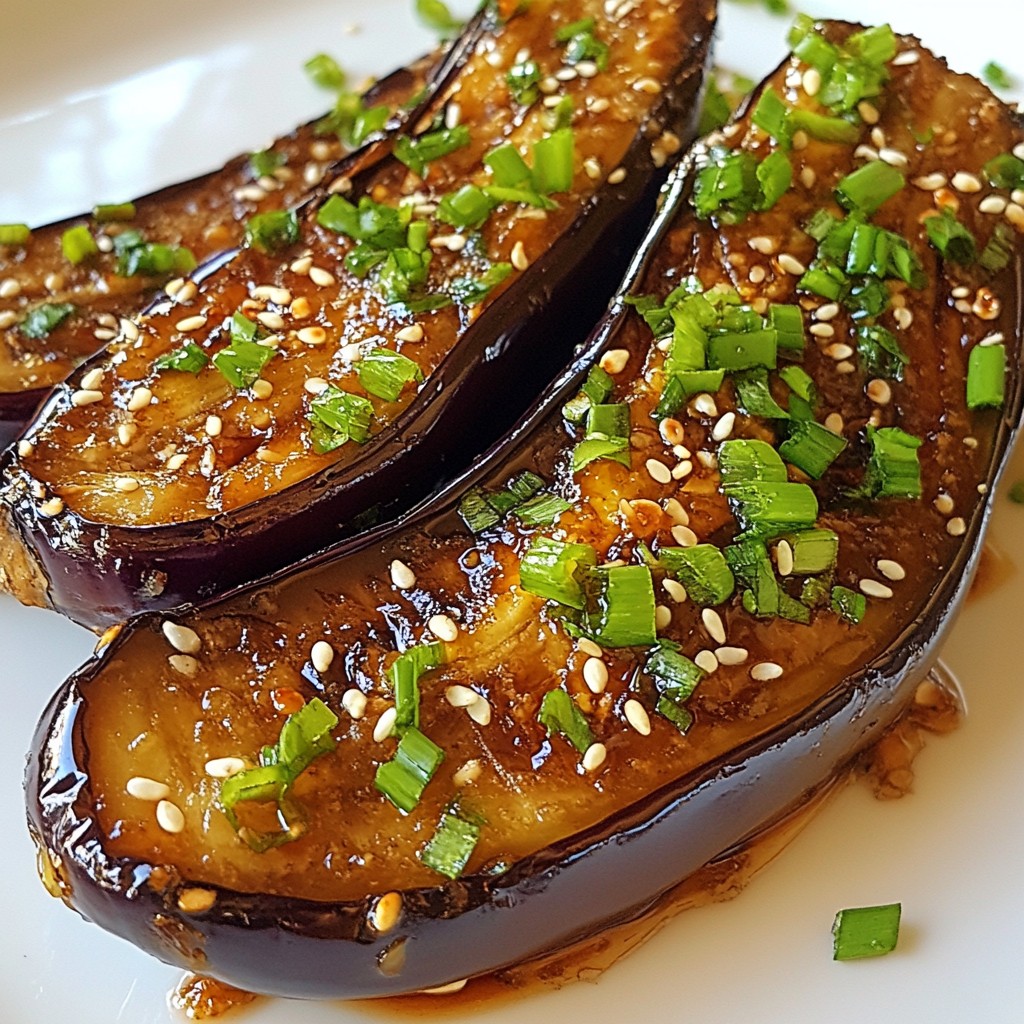
If you're craving a dish that's rich, flavorful, and oh-so-satisfying, Miso Glazed Eggplant is your answer! With just a few simple ingredients, you can create an elegant meal that bursts with umami flavor. This guide will walk you through every step, from crafting the perfect glaze to roasting the eggplants to perfection. Trust me, this dish will soon become a favorite on your table! Ready to dive in? Let’s get cooking!
Why I Love This Recipe
- Flavorful Glaze: The combination of miso, maple syrup, and sesame oil creates a rich and umami-packed glaze that elevates the natural taste of eggplant.
- Healthy and Nutritious: Eggplants are low in calories and high in fiber, making this dish a healthy addition to any meal without sacrificing flavor.
- Simple Preparation: With just a few ingredients and straightforward steps, this recipe is perfect for both novice and experienced cooks.
- Beautiful Presentation: The glossy, caramelized tops of the eggplants, adorned with sesame seeds and green onions, make for a stunning dish that impresses guests.
Ingredients
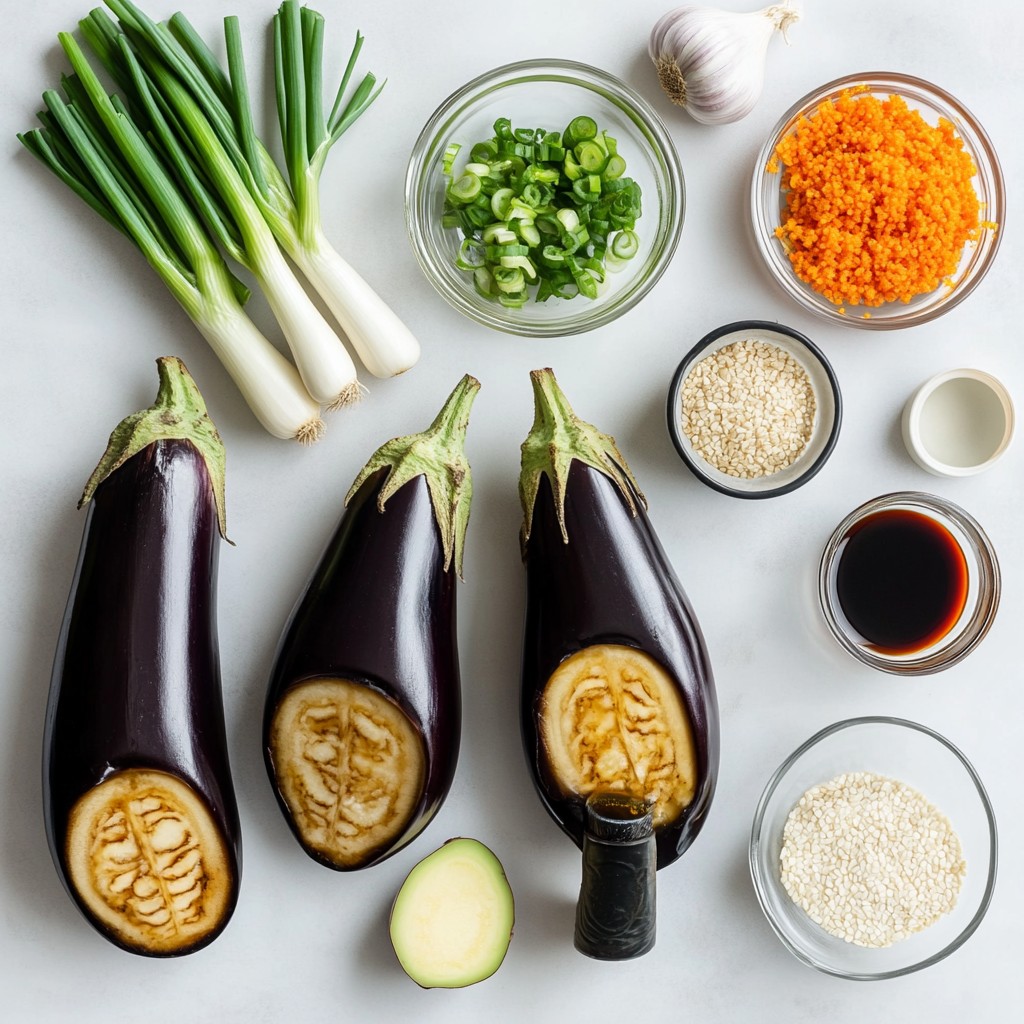
Here are the ingredients you need for miso glazed eggplant:
- 2 medium-sized eggplants, halved lengthwise
- 3 tablespoons white miso paste
- 2 tablespoons maple syrup or honey
- 1 tablespoon soy sauce or tamari
- 1 tablespoon sesame oil
- 1 teaspoon rice vinegar
- 1 tablespoon freshly grated ginger
- 1 clove garlic, minced
- Sesame seeds for garnish
- Chopped green onions for garnish
Each ingredient plays a big role in flavor. The eggplant is the star. Miso paste gives a deep, umami taste. Maple syrup adds a sweet touch, while soy sauce brings saltiness. Sesame oil ties the flavors together. Rice vinegar adds a bit of tang. Ginger and garlic enhance the dish with warmth and spice.
When you combine these ingredients, they create a rich glaze. The glaze seeps into the eggplant, making it juicy and tender. This dish is not just tasty; it’s also colorful and fun to serve. Enjoy the process of gathering these ingredients. Each one brings you closer to a delicious meal!
Step-by-Step Instructions
Preheat and Prepare
- Preheat oven to 400°F (200°C).
- Cut eggplants in half lengthwise and create a crosshatch pattern.
Start by preheating your oven. This step is key for getting the eggplants nice and tender. While the oven heats, take your eggplants. Cut them in half from top to bottom. Now, make a crosshatch pattern on the flesh. Use a knife and be careful not to cut through the skin. This pattern helps the glaze soak in and adds a great look.
Make the Miso Glaze
- Combine miso paste, maple syrup, soy sauce, sesame oil, rice vinegar, grated ginger, and garlic in a bowl.
- Whisk until smooth.
Next, grab a medium bowl. Add the white miso paste, maple syrup, soy sauce, sesame oil, rice vinegar, grated ginger, and minced garlic. Whisk all these ingredients together until they form a smooth mixture. This glaze is where the magic happens. It will give the eggplant a rich, savory flavor.
Apply the Glaze and Roast
- Brush the miso glaze on eggplant halves.
- Bake for 25-30 minutes until tender and caramelized.
Now, it’s time to coat the eggplants. Place them cut side up on a baking sheet. Use a brush to spread the miso glaze over each half. Make sure to fill in the cuts you made earlier. This lets the flavor seep in more. Once they are coated, put the baking sheet in the oven. Bake the eggplants for 25 to 30 minutes. They should become tender and caramelized. You want a nice golden color on top. Enjoy the aroma as they roast!
Tips & Tricks
Best Practices for Eggplant
- Choosing the right eggplants: Look for firm, shiny eggplants with smooth skin. They should feel heavy for their size. Avoid any with bruises or soft spots. Fresh eggplants taste best.
- Proper cutting technique for maximum flavor: Halve the eggplants lengthwise. Score a crosshatch pattern in the flesh. Cut about half an inch deep. This helps the miso glaze soak in and caramelize better.
Miso Glaze Variations
- Substitutions for miso paste: You can use red miso for a stronger flavor. If you cannot find miso, try tahini or peanut butter. Both add creaminess and depth.
- Alternative sweeteners for glaze: Maple syrup works well, but you can use agave nectar or brown sugar. Each will give a slightly different taste. Choose what you like best!
Garnishing Suggestions
- Additional toppings for enhanced flavor: Sprinkle sesame seeds and chopped green onions on top. You can also add crushed peanuts or fresh herbs for extra crunch and flavor.
- Plating ideas for presentation: Serve the eggplants on a colorful platter. Add a side of steamed rice or quinoa for a complete meal. The contrast of colors makes the dish pop!
Pro Tips
- Choose the Right Eggplant: Look for firm, shiny eggplants with smooth skin. Avoid any that have soft spots or blemishes, as these can affect the texture and flavor of your dish.
- Adjust Sweetness to Taste: If you prefer a sweeter glaze, feel free to add more maple syrup or honey. Conversely, if you like it less sweet, you can reduce the amount to suit your palate.
- Perfect Roasting Time: Keep an eye on the eggplants while roasting; cooking times can vary based on their size. They should be fork-tender and caramelized, but not mushy.
- Garnish for Visual Appeal: Adding sesame seeds and chopped green onions not only enhances flavor but also elevates the dish's presentation. Don't skip this final touch!
Variations
Vegan Version
You can easily make this dish vegan. Just swap honey for maple syrup. Maple syrup gives a sweet touch without using animal products. For gluten-free options, switch soy sauce with tamari. This small change keeps the dish safe for everyone.
Spice It Up
If you like heat, add chili flakes or hot sauce to the glaze. This gives the eggplant a nice kick. You can also mix other flavors into your glaze. Try adding a bit of miso-honey or teriyaki sauce. These tweaks add layers of flavor that excite the taste buds.
Serving Suggestions
Miso glazed eggplant pairs well with rice or quinoa. This combo makes for a hearty meal. You can also serve it with other roasted veggies. Mixing in colorful vegetables adds nutrition and makes the plate look beautiful. Enjoy experimenting with these ideas!
Storage Info
Storing Leftovers
To keep your miso glazed eggplant fresh, store it in an airtight container. Place the eggplant in the fridge within two hours of cooking. It will stay good for up to three days. If you want to keep it longer, you can freeze it.
- Freezing for Later Use:
- First, let the eggplant cool completely.
- Wrap each half in plastic wrap.
- Place them in a freezer bag, removing as much air as possible.
- Label the bag with the date and freeze for up to three months.
Reheating Tips
When you are ready to enjoy the leftovers, reheating is easy. You want to keep the flavors intact. The best methods are:
- Oven Method:
- Preheat your oven to 350°F (175°C).
- Place the eggplant on a baking sheet.
- Heat for about 10-15 minutes until warm.
- Microwave Method:
- Place the eggplant on a microwave-safe plate.
- Cover it with a damp paper towel.
- Heat for 1-2 minutes, checking every 30 seconds.
Suggested Serving Ideas When Reheated:
- Serve warm over rice or quinoa.
- Add fresh green onions and sesame seeds for a pop of color.
- Pair with a light salad for a complete meal.
Storing and reheating your miso glazed eggplant properly ensures you enjoy its rich, flavorful delight even after the first meal.
FAQs
What is miso paste and how is it used?
Miso paste is a thick paste made from fermented soybeans. It has a rich and salty flavor. There are different types of miso paste, including white, yellow, and red. White miso is the mildest and sweetest. Red miso is stronger and saltier. You can use miso paste in soups, marinades, and glazes. For our eggplant, we use white miso for its creamy taste. It blends well with maple syrup to make a delicious glaze.
Can I use other vegetables for this recipe?
Yes, you can use many other vegetables. Zucchini, bell peppers, or mushrooms work well. You can also try root vegetables like carrots or sweet potatoes. Just adjust the cooking time based on the vegetable you choose. Each vegetable will soak up the miso glaze and offer a unique flavor. Don’t be afraid to experiment!
How do I know when the eggplant is cooked?
Eggplant is cooked when it feels soft and tender. You can test it easily with a fork. If the fork goes in easily, it’s ready. The skin should look slightly wrinkled and the top should be caramelized. This shows the sugars are caramelizing, giving it a rich flavor. Keep an eye on it while roasting to avoid overcooking.
This blog post covered a delicious roasted eggplant recipe with a tasty miso glaze. We explored ingredients, preparation steps, storage tips, and answered common questions. You can enjoy this dish in many ways, whether you want it spicy, vegan, or as a side to grains. Remember, choosing fresh eggplants and garnishing well makes a big difference. Don't hesitate to experiment with the miso glaze and serve it your way. This recipe is simple and flexible, so dive in and bring some joy to your table!