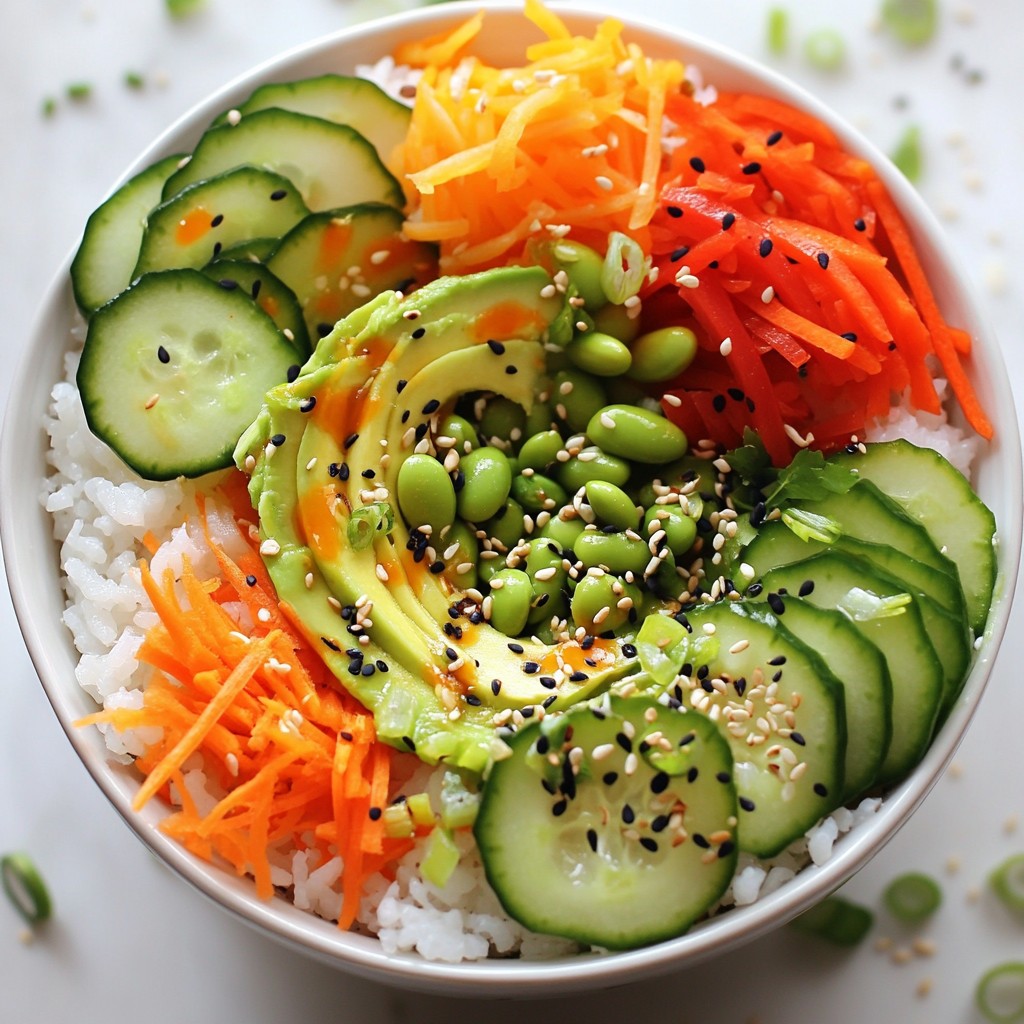
Looking to impress your taste buds with a colorful twist? Rainbow Veggie Sushi Bowls are the perfect blend of taste and health. You can make a fun, vibrant meal packed with fresh veggies and rice. In this blog post, I’ll guide you through each step, from selecting the right ingredients to perfecting the presentation. Let's dive in and create a healthy dish that's as delightful to see as it is to eat!
Why I Love This Recipe
- Colorful Presentation: This recipe creates a vibrant and visually stunning dish that’s as appealing to the eyes as it is to the palate.
- Healthy Ingredients: Packed with fresh vegetables and nutritious ingredients, this bowl is a wholesome choice for any meal.
- Customizable: You can easily swap out vegetables or add your favorite proteins, making it versatile for different tastes and dietary preferences.
- Quick and Easy: With a simple preparation process, this recipe is perfect for busy weeknights or when you're craving something fresh and light.
Ingredients
Main Ingredients for Rainbow Veggie Sushi Bowls
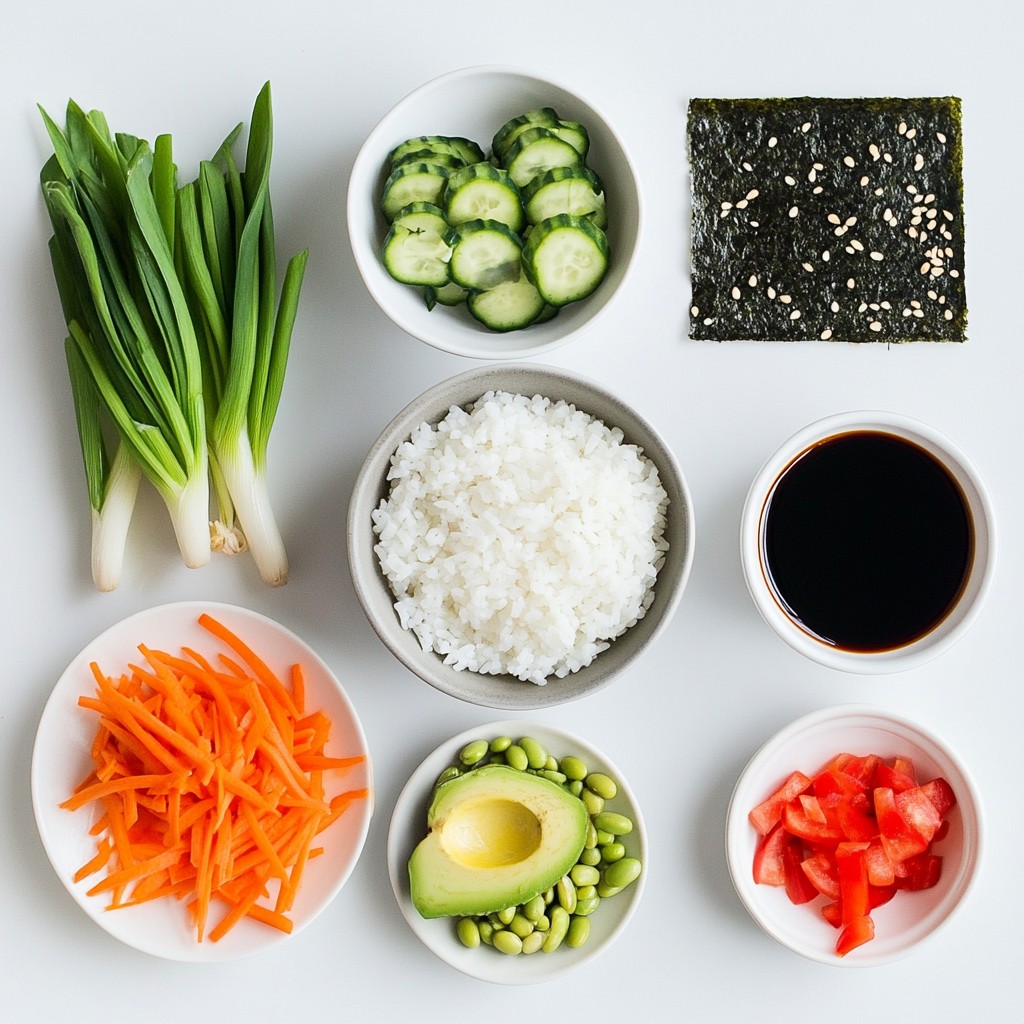
To make Rainbow Veggie Sushi Bowls, you need these main ingredients:
- 1 cup sushi rice (or jasmine rice)
- 1 1/4 cups water
- 1 tablespoon rice vinegar
- 1 teaspoon sugar
- 1/2 teaspoon salt
- 1 medium cucumber, julienned
- 1 medium carrot, grated
- 1 ripe avocado, sliced
- 1/2 red bell pepper, thinly sliced
- 1/2 cup edamame (shelled)
These ingredients create a colorful and tasty bowl that bursts with flavor.
Optional Ingredients and Toppings
You can add some optional ingredients to enhance your bowls:
- 1/4 cup pickled ginger
- 1 sheet nori, cut into strips
- Soy sauce, for drizzling
- Sesame seeds, for garnish
- Fresh cilantro or sliced green onions, for garnish
These additions can give your sushi bowl extra flair and flavor.
Suggested Tools and Cookware
To prepare your Rainbow Veggie Sushi Bowls, gather these tools:
- Medium-sized pot for cooking rice
- Mixing bowl for rice
- Grater for the carrot
- Knife and cutting board for slicing
- Measuring cups and spoons
Having these tools ready will make your cooking process smooth and easy.
Step-by-Step Instructions
Preparing the Sushi Rice
To start, rinse the sushi rice under cold water. Keep rinsing until the water runs clear. This step removes excess starch. It helps the rice stay fluffy. Next, combine the rinsed rice with 1 1/4 cups of water in a medium pot. Bring it to a boil over medium-high heat. When it boils, reduce the heat to low. Cover the pot and let it simmer for 15 minutes. Avoid lifting the lid during this time. After 15 minutes, take the pot off the heat. Keep it covered for another 10 minutes. This lets the rice steam and become soft.
Flavoring the Rice with Rice Vinegar Mixture
While the rice rests, make the flavor mix. In a small bowl, whisk together 1 tablespoon of rice vinegar, 1 teaspoon of sugar, and 1/2 teaspoon of salt. Mix until everything dissolves. Once the rice is ready, transfer it to a large bowl. Gently fold the vinegar mixture into the rice using a spatula. Make sure all of the rice gets coated. Let the rice cool down slightly. This gives it a great taste and texture.
Arranging the Vegetables in the Bowls
Next, prepare the vegetables. Julienne the medium cucumber and grate the medium carrot. Slice the ripe avocado and red bell pepper thinly. For the edamame, steam or microwave it until warm. Now it's time to assemble the bowls. Start by placing a scoop of sushi rice in the center of each bowl. Arrange the cucumber, carrot, avocado, red bell pepper, and edamame around the rice. Create a colorful rainbow pattern. Add a few strips of nori on top for crunch. If you like, include pickled ginger as well. Finally, drizzle soy sauce over each bowl. For garnish, sprinkle sesame seeds and add fresh cilantro or sliced green onions. This adds flavor and a lovely look.
Tips & Tricks
Perfecting the Sushi Rice Texture
To make perfect sushi rice, start by rinsing it well. Wash it until the water runs clear. This step removes extra starch. Too much starch makes the rice sticky. Next, use the right water ratio. For every cup of sushi rice, use 1.25 cups of water. Bring it to a boil, then lower the heat. Cook covered for 15 minutes without lifting the lid. After that, let it sit for 10 more minutes. This steams the rice and makes it fluffy.
Presentation Tips for a Stunning Sushi Bowl
For a beautiful sushi bowl, use wide, shallow bowls. This helps show off the colors. Start with a scoop of sushi rice in the center. Then, arrange the veggies around the rice. Use a rainbow pattern with the cucumber, carrot, avocado, and bell pepper. Add edamame for a pop of color. Finish with nori strips on top. A sprinkle of sesame seeds adds crunch. For added flair, place a lemon wedge on the side. This adds color and flavor.
Common Mistakes to Avoid
One common mistake is overcooking the rice. Keep the lid down while it cooks. Another mistake is not letting the rice rest. Skipping the resting time makes the rice dense. It’s also important to balance the flavors. If the rice is too sour, add more sugar. If it’s too sweet, add more salt. Lastly, avoid overcrowding the bowl. Leave some space for each ingredient to shine. This makes your bowl look appealing and tastes great.
Pro Tips
- Rinse the Rice: Always rinse your sushi rice thoroughly until the water runs clear to remove excess starch, ensuring the rice cooks up fluffy and not overly sticky.
- Let it Steam: After cooking, let the rice sit covered for an additional 10 minutes. This steaming time allows the rice to finish cooking and become perfectly fluffy.
- Colorful Arrangements: When assembling your bowls, arrange the vegetables in a visually appealing rainbow pattern for a stunning presentation that is sure to impress.
- Experiment with Toppings: Feel free to add other toppings like sliced radishes, sesame oil, or spicy mayo to customize your sushi bowls to your taste.
Variations
Ingredient Substitutions for Dietary Preferences
You can easily change ingredients to fit your diet. If you're gluten-free, use tamari instead of soy sauce. For a vegan option, skip the pickled ginger or use a vegan alternative. If you're avoiding rice, quinoa or cauliflower rice works well. For those who prefer low-carb options, try using spiralized zucchini instead of rice. You can also swap vegetables based on what you like. Try bell peppers, radishes, or snap peas for a fun twist.
Alternative Sauces and Dressings
The sauce can make or break your dish. Instead of soy sauce, try a spicy mayo made from vegan mayo and sriracha. A sesame dressing with rice vinegar, sesame oil, and a touch of honey adds a nice flavor. If you want something lighter, mix soy sauce with lime juice for a zesty kick. A peanut sauce also pairs well with the veggies. Each sauce brings a unique taste to your sushi bowls.
Adding Protein Options
Protein can make your meal more filling. For a vegetarian option, add tofu or chickpeas. Cook the tofu until golden brown for a nice texture. You can also use edamame, which is already in the recipe. If you eat seafood, add shrimp or crab. Grilled chicken or beef can also work. Just keep in mind that each protein option brings its own flavor, so choose what you enjoy the most.
Storage Information
How to Store Leftover Sushi Bowls
To store leftover sushi bowls, place them in airtight containers. Make sure to separate the rice from the vegetables. This helps keep everything fresh. The rice can become mushy if left with the veggies. Store in the fridge for up to two days.
Reheating Instructions for Sushi Rice
To reheat sushi rice, use a microwave. Place the rice in a microwave-safe bowl. Add a splash of water to keep it moist. Cover the bowl with a damp paper towel. Heat the rice in 30-second intervals, stirring in between. Stop when the rice is warm but not hot.
Best Practices for Fresh Ingredients
Always choose fresh ingredients for your sushi bowls. Store vegetables in the fridge to maintain crispness. Use them within a few days for the best flavor. If you buy pre-cut veggies, check the expiration date. Keep avocados at room temperature until ripe. Once ripe, store them in the fridge to extend freshness.
FAQs
What is the best type of rice to use for sushi bowls?
The best rice for sushi bowls is sushi rice. This rice is short-grain and sticky. It holds together well, making it easy to pick up with chopsticks. If you can't find sushi rice, jasmine rice works too. It has a nice flavor and texture, though it may not be as sticky. Rinse the rice before cooking to remove excess starch. This step helps the rice stay fluffy and not too sticky.
Can I prepare Rainbow Veggie Sushi Bowls ahead of time?
Yes, you can prepare Rainbow Veggie Sushi Bowls ahead of time. Cook the rice and let it cool. Store it in an airtight container in the fridge. You can also prep the veggies in advance. Slice the cucumber, carrot, and bell pepper, and store them in separate containers. Keep the avocado fresh by slicing it just before serving. This way, it won't brown. Assemble the bowls when you're ready to eat for the best flavor and texture.
What are some health benefits of the ingredients used?
Rainbow Veggie Sushi Bowls are packed with healthy ingredients. Here are some benefits:
- Sushi Rice: Provides carbs for energy.
- Cucumber: Hydrating and low in calories.
- Carrot: Rich in beta carotene for good vision.
- Avocado: Full of healthy fats for heart health.
- Red Bell Pepper: High in vitamin C for immunity.
- Edamame: A great source of plant protein and fiber.
Each ingredient adds color and nutrients. Enjoy these bowls for a healthy meal!
Rainbow veggie sushi bowls are colorful, healthy meals you can make at home. We discussed key ingredients, tools, and step-by-step instructions to create these tasty bowls. Remember to perfect the rice texture and avoid common mistakes for the best results. You can customize your bowls with different toppings and proteins to fit your taste. Store leftovers well to enjoy them later. With these tips, you can make sushi bowls that impress. Enjoy this fun cooking adventure and share it with friends!