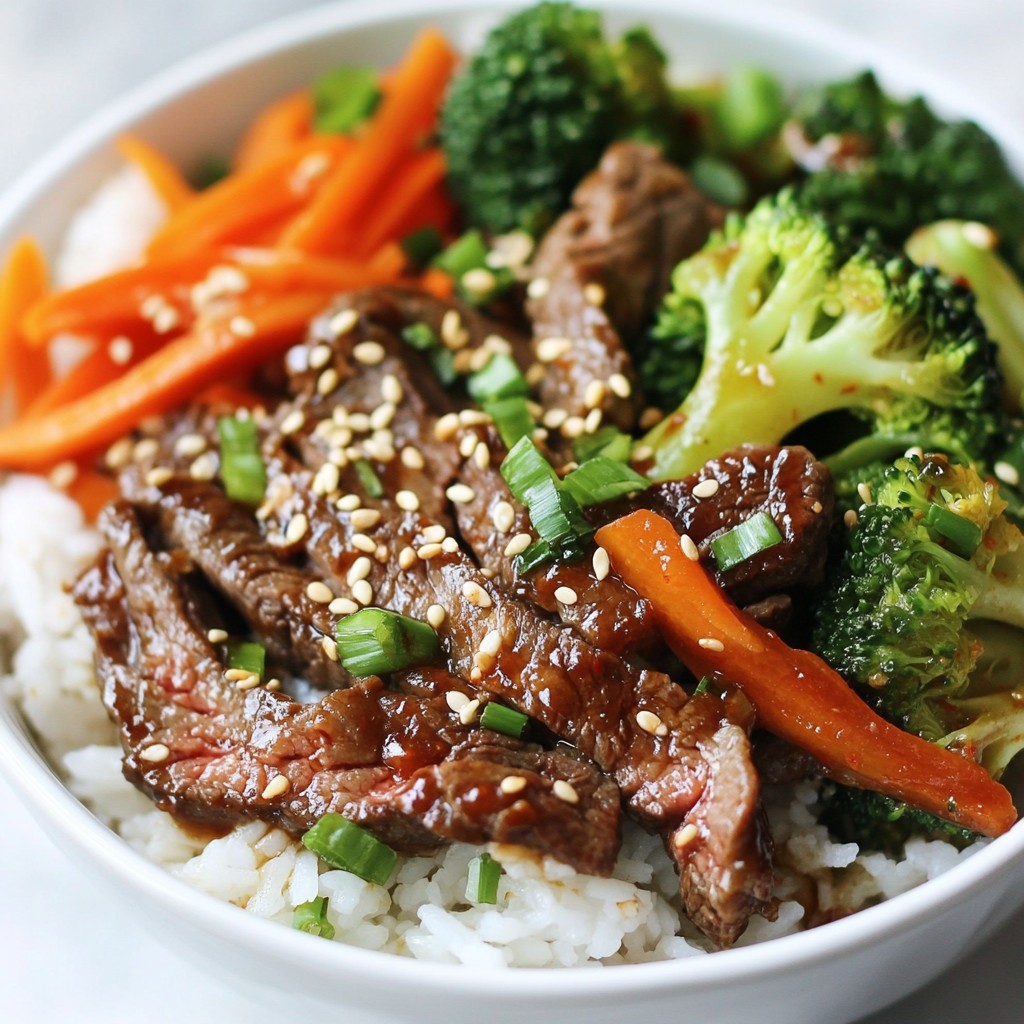
If you're craving a meal that's both tasty and simple, Spicy Korean Beef Bulgogi Bowls are perfect for you! This dish is quick to make and bursting with flavors. You’ll learn how to marinate the beef and cook it just right. Plus, I’ll share tips for beautiful bowls, swap out proteins, and offer storage ideas for leftovers. Join me in creating a meal that delights your taste buds without the fuss!
Why I Love This Recipe
- Bold Flavors: This dish packs a punch with its combination of Gochujang, garlic, and ginger, creating an explosion of taste in every bite.
- Quick and Easy: With a 10-minute prep time and only 45 minutes total, this recipe is perfect for busy weeknights while still being impressive enough for guests.
- Healthy and Colorful: Loaded with vibrant vegetables like broccoli, red bell pepper, and carrots, this meal is not only delicious but also visually appealing and nutritious.
- Customizable: Feel free to adjust the spice level or add your favorite vegetables, making this recipe versatile for any palate.
Ingredients
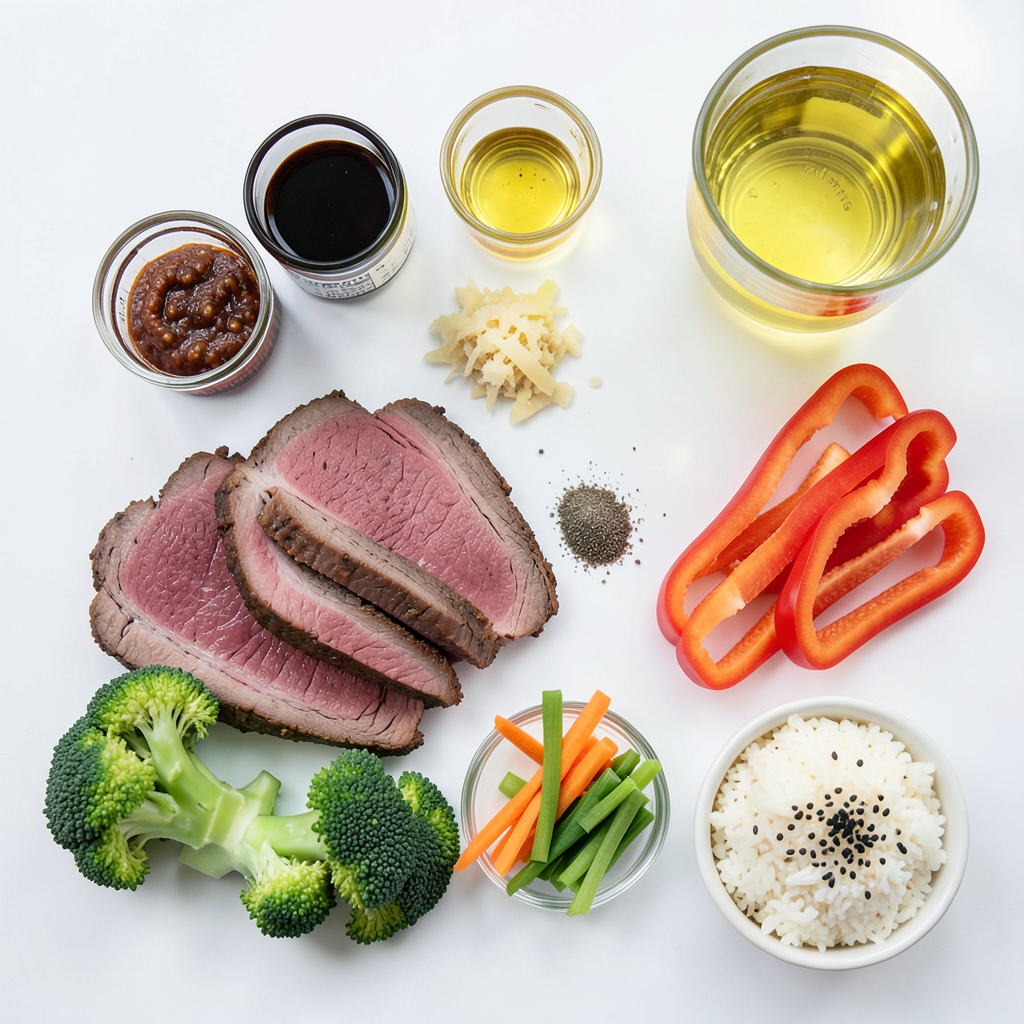
Main ingredients for Spicy Korean Beef Bulgogi Bowls
- 1 lb (450g) of thinly sliced beef ribeye or sirloin
- 1 cup of fresh broccoli florets
- 1 red bell pepper, sliced into thin strips
- 1 carrot, peeled and julienned
- 2 cups of cooked jasmine or short-grain rice
- 2 green onions, chopped into rounds
- Toasted sesame seeds for garnish
For the beef, ribeye or sirloin works best. It’s tender and flavorful. The veggies add a nice crunch and color. Jasmine rice is perfect for soaking up the sauce.
Marinade components
- 1/4 cup of low sodium soy sauce
- 2 tablespoons of brown sugar
- 1 tablespoon of sesame oil
- 2 cloves of garlic, finely minced
- 1 teaspoon of freshly grated ginger
- 1 tablespoon of Gochujang (Korean red chili paste)
- 1/2 teaspoon of freshly ground black pepper
This marinade is key to great flavor. Soy sauce gives umami. Brown sugar adds sweetness, while Gochujang brings heat. The ginger and garlic add depth.
Serving components and garnishes
- Toasted sesame seeds for garnish
For serving, I like to sprinkle toasted sesame seeds on top. They add a nice crunch and a nutty flavor. You can also drizzle extra sesame oil for more richness.
Step-by-Step Instructions
Preparing the marinade
To start, grab a medium-sized bowl. In this bowl, you will mix the marinade. Combine the low sodium soy sauce, brown sugar, and sesame oil. Add in the minced garlic, grated ginger, Gochujang, and black pepper. Whisk everything together until it blends well. This marinade gives the beef its spicy and sweet taste.
Marinating the beef
Next, take your thinly sliced beef ribeye or sirloin. Add it to the bowl with the marinade. Gently toss the beef to coat each piece. Cover the bowl with plastic wrap. Let it sit for at least 30 minutes. For more flavor, place it in the fridge overnight. This helps all the flavors soak in.
Cooking the beef and vegetables
Now, heat a large skillet or wok over medium-high heat. Once hot, pour in the vegetable oil. Let it coat the bottom of the pan. Add the marinated beef in a single layer. Cook it undisturbed for 3-4 minutes. Stir occasionally until the beef turns a nice brown color and cooks through.
Then, it’s time to add the vegetables. Toss in the broccoli, red bell pepper, and carrot. Stir-fry everything together for another 3-4 minutes. The veggies should look bright and stay crisp.
Assembling the bowls and serving
Once the beef and veggies are cooked, take the skillet off the heat. Fold in the chopped green onions for a fresh taste. Now, it’s time to build your bowls. Start with a scoop of cooked jasmine or short-grain rice. Top it with the spicy beef and vegetable mix. To finish, sprinkle some toasted sesame seeds on top. These add a nice crunch and look great. Enjoy your colorful and tasty Korean beef bulgogi bowls!
Tips & Tricks
Best practices for marinating beef
For the best flavor, use ribeye or sirloin. These cuts are tender and juicy. Make sure to slice the beef thinly. This helps it soak up the marinade well. Use a large bowl for marinating. This allows the beef to mix with the marinade easily. Try to marinate for at least 30 minutes. For richer flavor, marinate overnight in the fridge.
Cooking tips for tender beef and vibrant vegetables
Heat your skillet well before adding the beef. This keeps it tender and prevents it from steaming. Cook the beef in one layer for even cooking. Stir it only when necessary to get a nice sear. Once the beef is cooked, add the vegetables. Quick stir-frying keeps them crunchy and colorful. Cook them only a few minutes until they are bright and tender.
Presentation tips for beautiful plating
Presentation makes your meal more appealing. Serve the bulgogi in individual bowls. Start with a scoop of rice as the base. Layer the beef and vegetables on top. Make it colorful by arranging the veggies artfully. Finish with toasted sesame seeds for crunch. For extra flavor, drizzle some sesame oil or add more Gochujang on top. Enjoy the vibrant colors and delicious smells!
Pro Tips
- Marinate Longer for Best Flavor: For a deeper and richer flavor, marinate the beef overnight. This allows the flavors to penetrate the meat thoroughly, making each bite more delicious.
- Use High Heat for a Great Sear: Cooking the beef over medium-high heat helps achieve a beautiful sear, locking in juices and flavors while preventing the meat from becoming tough.
- Prep Vegetables Ahead: To save time during cooking, prep your vegetables in advance. This way, you can quickly add them to the skillet without delays, ensuring everything cooks evenly.
- Garnish for Presentation: Don’t forget to garnish your bulgogi bowls with toasted sesame seeds and extra green onions. This adds visual appeal and enhances the overall flavor.
Variations
Alternative protein options
If you want to switch up the beef, try chicken or pork. Thinly slice chicken thighs for a juicy bite. You can also use pork tenderloin for a slightly sweeter taste. Both cook quickly, just like the beef. For a tasty twist, try using tofu. Firm tofu absorbs flavors well and gives a nice texture.
Veggie substitutes for a vegetarian version
You can make this dish vegetarian easily. Use a mix of mushrooms, bell peppers, and zucchini. They add great flavor and texture. Also, consider adding spinach or bok choy for extra greens. These veggies cook fast and keep that vibrant color. Use extra soy sauce for flavor if needed.
Different sauce options for customizing flavor
Feel free to play with the sauce! If you want it less spicy, reduce the Gochujang. You can also add some honey for sweetness. For a tangy twist, mix in some rice vinegar. If you like heat, try adding chili flakes or fresh chili slices. Each change lets you create your own unique bowl.
Storage Info
How to store leftovers
To store leftovers, place the beef and veggies in an airtight container. Make sure to cool them down before sealing. Keep the rice in a separate container to avoid sogginess. This way, your meal stays fresh longer. Store in the fridge for up to three days.
Reheating tips for optimal taste
When reheating, use a skillet for the best results. Heat the skillet over medium heat. Add a splash of water to keep the beef moist. Stir frequently until everything is hot. This helps maintain the flavors and texture. You can also microwave it, but check every 30 seconds to avoid overcooking.
Freezing recommendations for meal prep
If you want to freeze bulgogi, let it cool completely first. Pack it in freezer-safe bags or containers. Remove as much air as possible to prevent freezer burn. You can freeze it for up to three months. For best taste, thaw overnight in the fridge before reheating.
FAQs
What cut of beef is best for bulgogi?
The best cuts for bulgogi are ribeye or sirloin. Both cuts are tender and flavorful. Ribeye has more fat, which adds richness. Sirloin is leaner but still very tasty. Choose thinly sliced beef for quick cooking and great texture.
Can I make bulgogi ahead of time?
Yes, you can make bulgogi ahead of time. Marinate the beef the night before for the best flavor. Cook it just before you plan to serve. If you have leftovers, store them in the fridge. They taste great the next day too.
What can I serve with bulgogi bowls?
Bulgogi bowls are versatile. Serve them with jasmine or short-grain rice. You can also add fresh vegetables like cucumbers or lettuce. For extra flavor, try kimchi or pickled radishes. These sides add crunch and balance the spicy beef.
You learned about making Spicy Korean Beef Bulgogi Bowls, from ingredients to serving. Marinating the beef is key for flavor. Remember to use fresh veggies for a colorful plate. Consider variations for different diets or tastes.
These bowls combine fun and taste. Now, you’re ready to impress with a tasty dish. Enjoy cooking and sharing this meal with others!