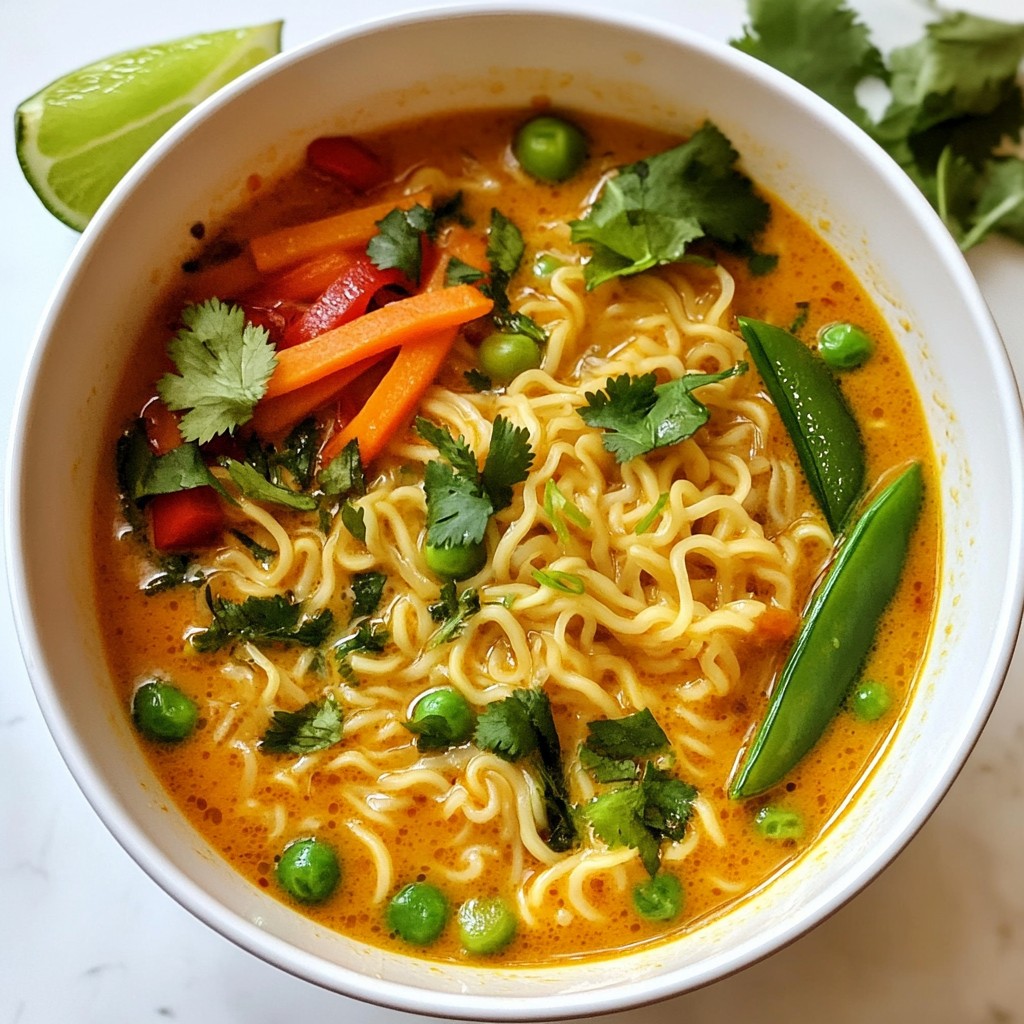
Craving a warm, comforting bowl of Thai Coconut Curry Ramen? You’re in the right place! This easy recipe blends rich coconut milk with zesty red curry for a dish that’s bursting with flavor. I’ll guide you through each step, from selecting fresh veggies to perfecting the broth. Whether you want it spicy or mild, this ramen is a perfect fit for any palate. Let’s dive into the delicious details!
Why I Love This Recipe
- Quick and Easy: This recipe comes together in just 30 minutes, making it perfect for a weeknight dinner when you're short on time.
- Flavor Explosion: The combination of coconut milk and red curry paste creates a rich, aromatic broth that's simply irresistible.
- Customizable: You can easily add your favorite proteins or vegetables, making it a versatile dish for any taste preference.
- Healthy and Wholesome: Packed with colorful veggies and nutrients, this ramen is both satisfying and nourishing.
Ingredients
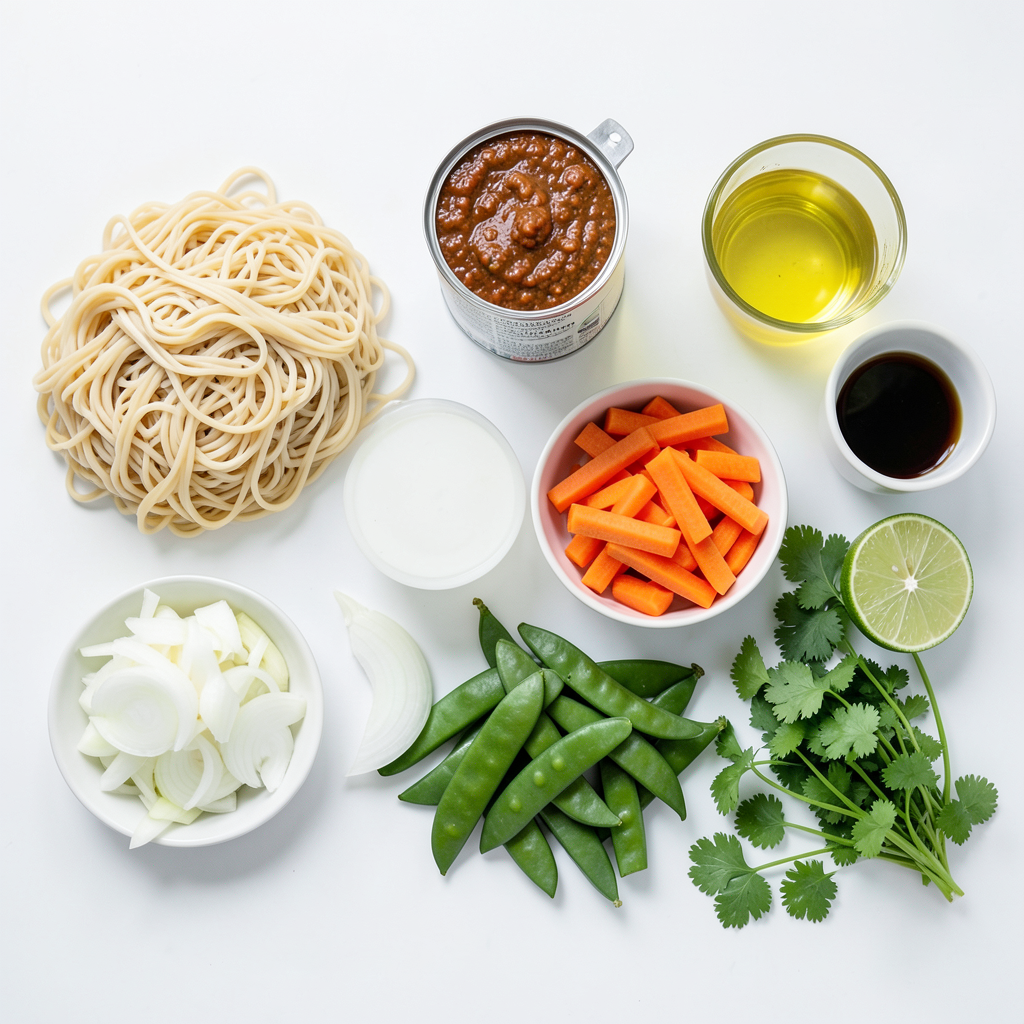
For your Thai Coconut Curry Ramen, you will need a few simple ingredients. Here’s the list:
- 200g ramen noodles
- 1 can (400ml) coconut milk
- 2 tablespoons red curry paste
- 1 tablespoon vegetable oil
- 1 medium onion, thinly sliced
- 1 bell pepper (red or yellow), thinly sliced
- 1 medium carrot, julienned
- 200g snap peas, trimmed
- 2 cups vegetable broth
- 2 tablespoons soy sauce
- 1 tablespoon fresh lime juice
- Fresh cilantro leaves, for garnish
- Lime wedges, for serving
Gather these ingredients before you start cooking. Each one adds flavor and texture. Ramen noodles give you that chewy base. Coconut milk creates a rich, creamy broth. Red curry paste brings warmth and spice. The fresh veggies add crunch and color. The lime juice gives it a zesty finish.
Step-by-Step Instructions
Cooking the Vegetables
1. Sauté the onion
Start by heating the vegetable oil in a large pot over medium heat. Add the sliced onion and cook for 3-4 minutes. You want the onion to be soft and clear.
2. Add red curry paste
Next, stir in the red curry paste. Cook it for one minute. This step wakes up the flavors and adds a nice aroma.
3. Incorporate other vegetables
Now, add the bell pepper, julienned carrot, and snap peas. Cook for about 5 minutes. Stir occasionally until the veggies stay bright and crunchy.
Making the Coconut Broth
1. Mix in vegetable broth and coconut milk
Pour the vegetable broth and coconut milk into the pot. Stir well to combine everything.
2. Bring to a simmer
Raise the heat slightly and let the mixture simmer. Keep it uncovered for about 10 minutes. This lets the flavors blend nicely.
Cooking Ramen Noodles
1. Prepare ramen according to package instructions
While the broth simmers, cook the ramen noodles based on the package guide.
2. Drain and set aside
Once cooked, drain the noodles and keep them aside. Make sure they do not stick together.
Combining Everything
1. Stir in soy sauce and lime juice
When the broth is hot and flavorful, mix in the soy sauce and lime juice. Taste it. If needed, add more soy sauce or lime to match your taste.
2. Serving the dish
Place a good amount of cooked ramen in each bowl. Pour the coconut curry broth and veggies over the noodles.
3. Garnish and enjoy
Top each bowl with fresh cilantro leaves. Serve lime wedges on the side for extra zest.
Tips & Tricks
Best Practices for Cooking
To keep your vegetables crisp, cook them just right. Aim for a bright color and a slight crunch. This makes your dish look nice and adds a great texture. After you mix in the coconut milk and broth, taste it. You may want to add more soy sauce or lime juice. This helps you find that perfect balance of flavor.
Making the Dish Your Own
Feel free to swap out veggies or proteins. You can use zucchini, mushrooms, or even broccoli. If you want to add protein, tofu or chicken works great. You can also choose between store-bought or homemade curry paste. Homemade paste can give a fresh taste, while store-bought is quick and easy.
Serving Suggestions
Pair this dish with a simple side salad or crusty bread. A light salad can balance the rich flavors of the curry. For drinks, try a cold Thai iced tea or a light beer. Both will complement the meal and enhance your dining experience.
Pro Tips
- Fresh Ingredients: Using fresh vegetables will enhance the flavor and texture of your curry. Opt for vibrant bell peppers and crunchy snap peas for the best results.
- Adjust Spice Level: If you prefer a milder curry, reduce the amount of red curry paste. You can always add more at the end if you desire additional heat.
- Perfectly Cooked Noodles: To prevent your ramen noodles from becoming mushy, rinse them under cold water after cooking and toss them with a little oil to keep them separate.
- Garnish for Flavor: Don’t skip the fresh cilantro and lime wedges. They add brightness and freshness that elevate the dish to a new level.
Variations
Vegetarian vs. Vegan Options
For a vegetarian dish, use vegetable broth and coconut milk. These give great flavor and richness. To make it vegan, ensure your red curry paste is free from shrimp paste or fish sauce. You can also add tofu for protein.
- Substitute chicken broth with vegetable broth.
- Use firm tofu and sauté it for added texture.
- Add mushrooms or extra veggies for more depth.
This way, you create a complete meal packed with nutrients.
Protein Additions
Adding protein can make your ramen heartier. You can easily incorporate tofu, chicken, or seafood.
- For tofu, press it to remove excess water. Cut into cubes and sauté until golden.
- If you prefer chicken, slice it thin and cook it with the onions.
- For seafood, shrimp or fish works well. Add them during the last few minutes of cooking.
These options will add more flavor and protein to your bowl.
Different Spice Levels
Adjusting the spice level is simple. You can tweak the amount of curry paste.
- For mild curry, reduce the red curry paste to one tablespoon.
- Add more if you like it spicy. You can also mix in fresh chili peppers or chili flakes for extra heat.
This allows you to customize the dish to fit your taste.
Storage Info
How to Store Leftovers
After enjoying your Thai Coconut Curry Ramen, you may have some leftovers. To keep them fresh, let the dish cool down first. Then, scoop the ramen and broth into separate containers. This helps keep the noodles from getting soggy. Use airtight containers for best results. Store them in the fridge, where they can last for up to three days.
Reheating Instructions
When it’s time to enjoy your leftovers, you want to heat them properly. The best way to reheat the broth is on the stove. Pour the broth into a pot and heat it over medium heat. Stir occasionally to warm it evenly. As for the noodles, you can add them to the pot for the last minute of heating. This helps avoid soggy noodles. If you prefer, you can also microwave them separately. Just add a little broth to keep them moist.
Freezing the Dish
If you want to save your Thai Coconut Curry Ramen for later, freezing is a good option. Make sure the dish has cooled completely before freezing. Place the broth and noodles in separate freezer-safe containers. This way, they maintain their taste and texture. You can keep them frozen for up to three months. When you’re ready to eat, thaw the broth in the fridge overnight. Reheat on the stove, and add the noodles just before serving. This keeps your meal fresh and tasty.
FAQs
What can I substitute for ramen noodles?
You can use several options for ramen noodles. Here are some that work well:
- Rice noodles
- Soba noodles
- Udon noodles
- Zucchini noodles
For gluten-free options, try:
- Rice noodles
- Shirataki noodles
- Zucchini noodles
These substitutes keep your dish tasty and enjoyable.
Can I make this dish ahead of time?
Yes, you can prepare this dish in advance. Here are some tips:
- Cook the vegetables and broth in advance.
- Store the noodles separately to avoid sogginess.
- Combine right before serving for the best taste.
Meal prep makes it easy to enjoy later. Just reheat the broth and noodles together.
Is Thai Coconut Curry Ramen spicy?
The spice level depends on the red curry paste you choose. Many brands vary in heat. If you want it milder, here’s how to adjust:
- Start with less red curry paste.
- Add coconut milk to cool the heat.
- Include a touch of sugar to balance flavors.
This way, even those sensitive to spice can enjoy this dish.
This blog post showed how to make a tasty Thai Coconut Curry Ramen. We covered the important ingredients, step-by-step cooking, and tips to enhance your meal. Remember, you can swap vegetables, adjust spice levels, and personalize your dish. Storing leftovers is easy, and reheating them keeps flavors fresh. You now have the tools to enjoy this dish your way. I hope you feel excited to try it and make it your own!